UK consumers are paying significantly more for everyday supermarket essentials compared to two years ago, driven by disease outbreaks, geopolitical conflicts, and rising production costs.
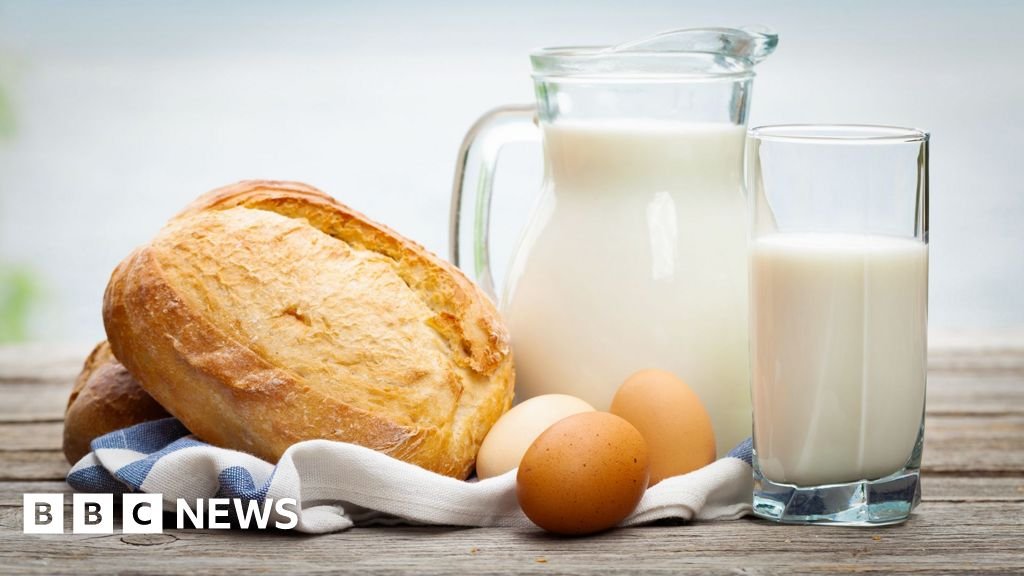
Data from market research firm Assosia, which analyzed average prices across Tesco, Sainsbury's, Asda, and Morrisons, reveals sharp increases in staples since 2022. A six-pack of supermarket own-brand free-range eggs has risen from £1 to £1.80. Similarly, four pints of budget semi-skimmed milk have increased from £1.29 to £1.65, and a basic medium-sliced white loaf of bread has risen from 65p to an average of 74p.
The increase in egg prices followed the UK's worst outbreak of avian flu between 2021 and 2023, which led to the culling of millions of hens. This sudden drop in laying hens, combined with the energy costs of keeping birds indoors during restriction periods, caused widespread shortages. Supermarkets rationed purchases, and both producers and retailers raised prices to offset losses. Feed costs also spiked because Ukraine is a major grain supplier, and its conflict with Russia drove up global grain and energy prices.
High energy usage in milking, processing, and transport similarly escalated milk prices, though global oversupply has recently slowed these increases. According to agricultural analysts at The Andersons Centre, dairy farmers are now being paid 25% less per litre of milk, leaving many operating at a loss. Meanwhile, the spike in wheat prices that drove up bread costs has leveled out, though conflict in the Middle East has introduced new global supply concerns.
Producer costs have risen well ahead of inflation. Office for National Statistics (ONS) data indicates the prices producers paid for materials and goods rose 7.7% in the year to April, marking the largest increase in over three years. Over the same period, factory gate prices—the amount producers charge retailers—only rose by 4%.
Danni Hewson, head of financial analysis at AJ Bell, noted that because contracts between producers and supermarkets are signed in advance, producers must often absorb mid-contract cost spikes in energy or fuel. "Without a crystal ball nobody can know what is going to happen" to costs when contracts are signed, Hewson said. "So there will be a degree of some of these price increases, obviously, having to be swallowed by some of these producers."
Hewson added that a "perfect storm" of increased costs for raw materials, energy, labor, and packaging regulations has made these essentials more expensive.
Despite rising checkout costs, supermarket profit margins have not increased over the past 20 years. Although UK supermarket sales grew from approximately £130 billion to £160 billion between 2020 and 2024, a July 2024 investigation by the Competition and Markets Authority (CMA) found no evidence that retailers were artificially inflating prices during the 2022 and 2023 food price surges.
Hewson described the UK grocery sector as "massively competitive," with supermarkets frequently selling staple items at a loss to attract customers. "In most of those cases, what happens is the supermarket swallows those losses. And that impacts their margins," Hewson said. "These are not businesses that are making huge amounts for every pound that they sell. They have to work hard to make their money."
Andrew Opie, director of food and sustainability at the British Retail Consortium, stated that the UK remains "one of the most affordable places in Western Europe for grocery shopping." Opie added, "As food inflation has risen in recent years, supermarkets have ramped up their focus on offering value on everyday staples - in some cases selling products below cost and absorbing the impact through their own margins to deliver savings for customers."
Pneumetron
PNEUMETRON EDITORIAL TEAM
Rajini Ravindra holds an M.A. in History from Mysore University (KSOU). Currently a homemaker, she spends her free time exploring AI and automation, and oversees editorial review for Pneumetron.
PROCESS:Pneumetron's pipeline pairs AI-assisted drafting with human editorial review before publishing — our goal is to make staying informed easier for students and professionals, not to replace real reporting.
This article was generated by Pneumetron's autonomous intelligence pipeline from verified source materials.
Open Source Document at bbc.com ↗