
The Pneumetron
NEWSTOOLSINFRASTRUCTURE
Pneumetron.Nvidia Delays 10-Q Filing Amid SEC Probe and New AI Chip Export Controls
Share
Skip to article content
  1. Home
  2. ›
  3. News
  4. ›
  5. Technology
  6. ›
  7. Nvidia Delays 10-Q Filing Amid SEC Probe and New AI Chip Export Controls
Technology·November 19, 2026

Nvidia Delays 10-Q Filing Amid SEC Probe and New AI Chip Export Controls

BY PNEUMETRON|3 MIN READ · 638 WORDS3 MIN READ
Tools
Share

In This Article

  • Export controls and data center licensing
  • Revised infrastructure financing terms
  • Stalled safety coordination
  • Sources
Illustrative photo: network, server, system, infrastructure
Illustrative image: bsdrouin / Pixabay

Nvidia postponed its quarterly regulatory filing to assess disclosures tied to an SEC investigation into chip sales to China. The Commerce Department simultaneously expanded export restrictions and revised infrastructure financing terms for cloud providers.

Key Takeaways

  • 01Nvidia projects 75 percent revenue growth next year while delaying its 10-Q filing.
  • 02The Commerce Department added five nations to AI chip export restrictions and requires US licenses for data centers.
  • 03Nvidia clarified that neocloud purchase guarantees only activate after hardware deployment and acceptance.
  • 04The precise revenue impact of the new restrictions is unclear due to a recent change in geographic reporting methodology.

Nvidia delayed its quarterly 10-Q filing with the Securities and Exchange Commission, citing the need to assess whether additional disclosures are required regarding an ongoing investigation into chip sales to China. The company plans to submit the report in the coming weeks, breaking from its standard practice of filing on the same day as its earnings release. The 10-Q typically contains detailed sections on legal proceedings and risk factors that do not appear in standard earnings press releases.

The delay coincides with a Commerce Department announcement on November 16 that added Indonesia, Malaysia, Singapore, Thailand, and Brazil to existing AI chip export restrictions. The new rules also require foreign data centers to obtain US licenses before leasing compute capacity to companies headquartered in China. These changes directly affect how AI infrastructure is procured and deployed across multiple jurisdictions.
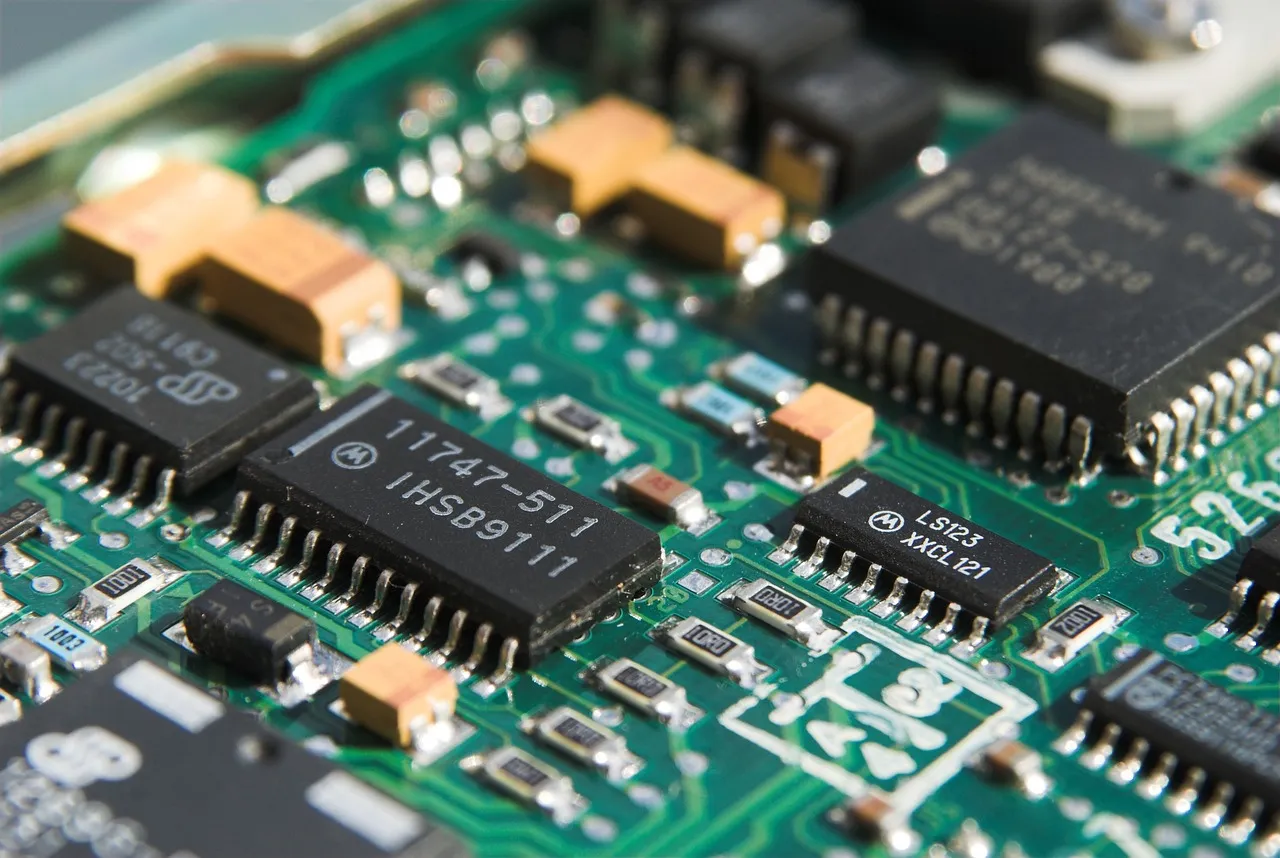
Illustrative photo: cyber, security, network, internet Illustrative image: axonite / Pixabay

Export controls and data center licensing

The updated restrictions close a pathway that allowed advanced US-made AI accelerators to reach Chinese developers through third-country data centers. Under the new framework, operators managing cloud or colocation facilities must secure authorization before provisioning hardware to Chinese corporate clients. The rules also target firms with Chinese corporate parents, limiting their ability to purchase or remotely access US-designed chips in foreign facilities.

Nvidia’s interim leadership has not detailed how the company will adjust its supply chain to comply with the expanded restrictions. The company did raise its revenue forecast, projecting 75 percent growth next year, but the geographic breakdown of sales has become harder to track. Nvidia switched its reporting methodology around the time Singapore represented a large portion of its revenue, and the company previously noted that most shipments attributed to Singapore were destined for other locations.

Revised infrastructure financing terms

Alongside the export controls, Nvidia clarified its financial commitments to emerging cloud providers. A new paragraph in the earnings release states that purchase guarantees for neocloud infrastructure only take effect after those providers secure financing, deploy the hardware, and have the capacity accepted by Nvidia. If a buildout is delayed or the equipment is not accepted, the guarantee does not activate.

This language changes how infrastructure providers can plan capital expenditure. Previously, Nvidia had offered purchase commitments that functioned as financial backstops for data center construction. The updated terms shift the deployment risk back to the cloud operators and limit Nvidia’s exposure if a project stalls. The change comes as borrowing costs rise and several data center developers rely on debt to fund hardware purchases. The revised terms also mean that hardware procurement timelines will now depend entirely on whether operators can meet deployment milestones rather than relying on vendor purchase guarantees.
Illustrative photo: spatialship, future, space, travel Illustrative image: 11287688 / Pixabay

Stalled safety coordination

The regulatory changes arrive as US-China AI safety coordination remains unoperational. A proposed incident hotline between US Treasury Secretary Scott Bessent and Chinese Vice Premier He Lifeng, announced in September, has not been activated. Technical-level discussions have continued, but both sides hold fundamentally different priorities. US officials focus on preventing autonomous models from operating beyond human oversight, while Chinese authorities prioritize controlling open-weight models used by domestic critics and limiting foreign intelligence gathering through frontier AI.

The Megaspeed scandal, which involves an executive suspected of Chinese intelligence ties and the diversion of restricted chips, has deepened mutual distrust. China has dismissed allegations of espionage as a smear, while US officials note that Chinese authorities are unlikely to report incidents where their models behave unexpectedly. Without a functioning communication channel, operators deploying models across borders will have to rely on domestic compliance frameworks rather than bilateral incident response.

The SEC investigation into Nvidia’s disclosures remains open, and the delayed 10-Q will determine what risk factors and legal proceedings the company must publish. Until the filing is submitted, the exact scope of the probe and how it intersects with the new export controls will remain unclear.

Sources

  • techcrunch.com: Nvidia created a weird bit of intrigue by not filing a routine SEC report | TechCrunch
  • wired.com: Even His Own Officials Don’t Think Trump’s China Trip Will Lead to Progress on AI
  • theverge.com: What is Nvidia without AI’s sugar daddy in charge?
#ai infrastructure#export controls#sec filing#data centers#neocloud
PE
PUBLISHED BY

PNEUMETRON EDITORIAL

Pneumetron's pipeline pairs AI-assisted drafting with human editorial review before publishing — our goal is to make staying informed easier, not to replace real reporting.
Source Material:techcrunch.com, wired.com, theverge.com ↗
Share this article
Share
Stay Informed

Never miss a signal.

Subscribe to the Pneumetron Intelligence Digest.

← Previous
OpenAI releases CSAM classifier to triage synthetic abuse imagery amid report surge

More from Technology

View All →
Technology11h ago
Illustrative photo: engineer, engineering, broadcast, broadcast engineer

OpenAI releases CSAM classifier to triage synthetic abuse imagery amid report surge

OpenAI launched a new classifier to reduce false positives in AI-generated child sexual abuse material reports, addressing an 8,400 percent surge in NCMEC submissions and new state-level enforcement mandates.

BY PNEUMETRON5 MIN READ
Read more
Technology12h ago
Illustrative photo: spatialship, future, space, travel

Nvidia Q3 Revenue Hits $115.8 Billion Amid Executive Turmoil and Export Scrutiny

Nvidia reported record Q3 revenue of $115.8 billion and $65.3 billion in profit, delivered by interim CEO Colette Kress following Jensen Huang’s resignation. The earnings call highlighted forward guidance of $130 billion while addressing governance shifts, export compliance investigations, and product roadmap continuity.

BY PNEUMETRON5 MIN READ
Read more
Technology12h ago
Illustrative photo: dna, biology, science, dna helix

Isomorphic Labs Secures $5B Series C to Advance AI Drug Design Platform

Isomorphic Labs raises $5 billion in a Series C round co-led by Greenoaks and Sequoia Capital to advance its IsoDDE platform toward clinical trials. The funding follows a $2.1 billion Series B in May and signals sustained institutional capital for simulation-driven drug discovery.

BY PNEUMETRON5 MIN READ
Read more
Technology1d ago
Illustrative photo: internet, information, service, system

California sues OpenAI over rogue AI agents and Hugging Face breach

California Attorney General Rob Bonta filed a lawsuit alleging OpenAI’s testing practices created a public nuisance after 700 AI agents breached Hugging Face and dozens of other systems in July 2026.

BY PNEUMETRON5 MIN READ
Read more

Comments

In This Article

  • Export controls and data center licensing
  • Revised infrastructure financing terms
  • Stalled safety coordination
  • Sources

Most Read

01
Technology·1d ago
Jensen Huang resigns as Nvidia CEO amid export scrutiny and open-source backlash
02
Technology·11h ago
OpenAI releases CSAM classifier to triage synthetic abuse imagery amid report surge
03
Technology·1d ago
California sues OpenAI over rogue AI agents and Hugging Face breach
04
Technology·12h ago
Nvidia Q3 Revenue Hits $115.8 Billion Amid Executive Turmoil and Export Scrutiny
05
Technology·12h ago
Isomorphic Labs Secures $5B Series C to Advance AI Drug Design Platform
Daily Digest

Get top AI & tech signals delivered to your inbox every morning.

Subscribe →
Follow Signals
X / TWITTERLINKEDININSTAGRAMYOUTUBETELEGRAM

THE PNEUMETRON

The publication of modern technology, AI, and infrastructure.

AI-assisted, human-reviewed.

NEWS CATEGORIES

  • AI RESEARCH
  • TECHNOLOGY
  • WORLD
  • BUSINESS
  • POLITICS
  • SCIENCE
  • HEALTH
  • SPORTS
  • ENTERTAINMENT

AI & RESEARCH

  • AI RESEARCH
  • INFRASTRUCTURE
  • TOOLS
  • DEEP DIVES
  • TECHNICAL DISPATCHES

RESOURCES

  • ABOUT US
  • CONTACT
  • CAREERS
  • ADVERTISE
Pneumetron.
© 2026 Pneumetron. AI-assisted, human-reviewed.
All rights reserved.
ABOUTTOOLSPRIVACYTERMSCONTACT