Firecrawl has released a unified infrastructure for AI agents to search, scrape, and access structured data through a single API, offering both a local binary and a hosted cloud service. The release targets a persistent bottleneck in agent development: reliably extracting clean, machine-readable context from the dynamic web. By standardizing output into formats like markdown and structured JSON, the platform aims to reduce token consumption and simplify the routing logic that agents typically require when interacting with external websites.
Local execution and MCP integration
Firecrawl Local runs as a single binary on a developer's machine, deliberately avoiding the overhead of databases, message queues, or container orchestration. It handles scraping, crawling, and site mapping directly from the host environment. For pages requiring JavaScript execution, the binary leverages whatever Chrome or Chromium instance is already present on the developer's machine. If a specific page fails to render locally, the system automatically routes the request to the Firecrawl Cloud service. The resulting payload includes a "source": "firecrawl-cloud" flag, allowing downstream logic to distinguish between locally processed and cloud-fetched content. Developers can disable this fallback entirely by setting the FIRECRAWL_CLOUD=off environment variable, forcing all operations to remain on the local machine.
The release places significant emphasis on native integration with AI coding assistants. The local binary includes an init command that scans the host for installed tools such as Claude Code, Claude Desktop, Cursor, Windsurf, Gemini CLI, and Codex. It registers Firecrawl as an MCP (Model Context Protocol) server for each detected tool, automatically backing up existing configuration files before applying the changes. The MCP server itself requires Node.js 22 or newer. Once initialized, the AI tool gains access to scrape, crawl, map, and batch scrape tools that execute locally, while other requests are routed to the cloud. Additionally, the local instance exposes a v2 API on port 3002. This allows developers to point any existing Firecrawl SDK at the local endpoint by updating the API URL, running the entire pipeline without API keys or network dependencies.
The comparison between the two primary deployment modes centers on computational overhead versus feature breadth:
| Feature | Firecrawl Local | Firecrawl Cloud |
|---|---|---|
| Scrape | Markdown, HTML, raw HTML and links | Adds structured JSON, summaries, screenshots and browser actions |
| Crawl, Map and Batch Scrape | ✅ | ✅ |
| PDFs and Office documents | ✅ | ✅, plus Parse for uploaded files |
| Search | Through Firecrawl Cloud, no account needed | ✅ |
| Alexandria | Through Firecrawl Cloud after firecrawl-local login | ✅ |
| Interact, Agent and Monitor | ✅ |
Cloud scale, autonomous agents, and Alexandria
The hosted Firecrawl Cloud service is designed for teams that need to scale beyond a single machine or require capabilities that exceed local browser constraints. According to the company's documentation, the cloud infrastructure covers 96% of the web and maintains a P95 latency of 3.4 seconds across millions of pages. It delivers LLM-ready outputs, including clean markdown, structured JSON, and browser screenshots, alongside features like web search and file parsing for PDFs and Office documents.
Beyond static extraction, Firecrawl ships with "Interact" and "Agent" capabilities that move beyond simple page scraping. The Interact feature allows an agent to take a previously scraped page and execute AI-driven or code-based actions. For example, an agent can issue a prompt to search a specific form field or click a dynamic button, returning the updated page content and a liveViewUrl for real-time inspection. The Agent feature operates autonomously, searching the web and navigating to retrieve specific information without requiring predefined start URLs. It supports custom schema enforcement, allowing developers to pass Pydantic models or JSON schemas that dictate the exact structure of the retrieved data. This ensures that autonomous data gathering returns strictly typed results rather than unstructured text.
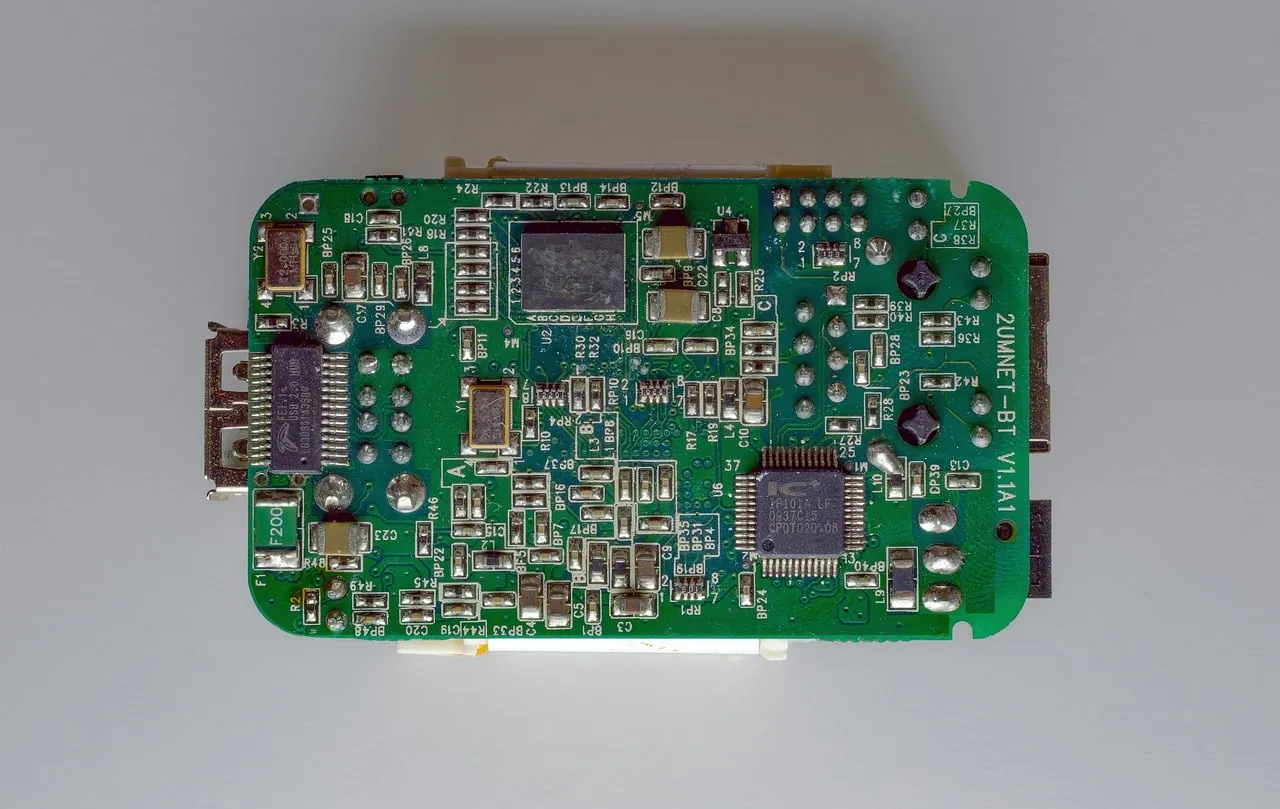 Illustrative image: Surprising_Media / Pixabay
For broader knowledge retrieval, the platform includes Firecrawl Alexandria. This library aggregates 550+ data providers through a single API, indexing over 250 million people, 75 million companies, and 41 million research papers. The system is designed so that AI agents can discover these tools alongside standard web results, inspect their inputs and pricing, and execute them to fetch structured data without leaving the agent's workflow. Discovery is free, while running a specific tool consumes credits based on the provider's listed rate.
Access and practical limitations
Firecrawl provides official SDKs in Python, Node.js, Go, Java, Rust, Ruby, .NET, PHP, and Elixir, ensuring broad compatibility across different agent frameworks. The SDKs handle asynchronous job management natively. When initiating a crawl or a batch scrape, the API returns a job ID rather than blocking until completion. The SDKs automatically poll the endpoint for the job status and return the finalized data once the operation finishes, abstracting away the need for developers to implement custom retry logic or status checks. The Firecrawl CLI serves as a unified interface for all cloud tools, designed to be consumed directly by AI agents. It handles authentication and job polling automatically, allowing agents to initiate searches, scrape URLs, or trigger crawls with a single command.
The company offers a "Keyless" tier that grants 1,000 free credits per month across the MCP, CLI, and API without requiring an account or signup. Full access to structured JSON, Interact, the Agent, and Alexandria requires an API key and a registered account.
The April 2024 release notes frame these capabilities and performance metrics as self-reported benchmarks. The 3.4-second P95 latency and 96% web coverage figures come directly from the company's documentation without independent verification. Furthermore, the local mode's reliance on a local browser installation means developers must manage Chromium dependencies, and static pages will only function if a browser is available to handle them. The self-hosted option, while available in the repository, requires managing separate queues, workers, and databases, which introduces operational overhead that the local binary explicitly avoids.
Sources
PNEUMETRON EDITORIAL
Pneumetron's pipeline pairs AI-assisted drafting with human editorial review before publishing — our goal is to make staying informed easier, not to replace real reporting.