NVIDIA’s Vera Rubin NVL72 platform debuted in MLPerf Training v6.1, delivering up to 2x per-GPU performance over the optimized Blackwell Ultra GB300 NVL72 baseline across six of seven benchmarks. The architecture achieved the fastest training times for large-scale pretraining, diffusion, recommendation, and reinforcement learning workloads, while the existing GB300 NVL72 cluster secured the absolute fastest result on the most communication-heavy model by scaling to 10,240 GPUs.
As AI agents tackle increasingly complex multi-step workflows, reducing time-to-train directly accelerates iteration cycles for both base models and their post-training phases. The Vera Rubin debut demonstrates that the CUDA software stack has reached a level of maturity where generational hardware upgrades translate immediately into measurable throughput gains across diverse modalities, from dense transformer pretraining to expert-parallel mixture-of-experts (MoE) training.
Benchmark Performance and Scaling Efficiency
The MLPerf Training v6.1 suite evaluates natural language, image generation, recommendation systems, and reinforcement learning. Vera Rubin NVL72 outperformed the GB300 NVL72 baseline across the board, with performance ratios ranging from 1.4x to 1.6x on most workloads. The generational advantage widened significantly on the most demanding benchmark, DeepSeek-V3 671B, a token-dropless MoE model requiring massive all-to-all communication. Vera Rubin NVL72 completed the 1,024-GPU training run in 4.14 minutes, compared to 8.03 minutes for the GB300 configuration.
The platform maintained above 97% scaling efficiency when expanding from 256 to 1,024 GPUs across 16 racks. While Vera Rubin dominated per-GPU efficiency, the GB300 NVL72 demonstrated superior absolute scale-out capabilities, running the identical DeepSeek-V3 workload across 10,240 GPUs in 1.38 minutes. This dual-platform strategy highlights how NVIDIA is deploying both high-efficiency rack-scale domains and massive cluster fabrics to cover different training requirements.
| Model Type | Benchmark | GPU Count | Vera Rubin NVL72 vs. GB300 NVL72 |
|---|---|---|---|
| Mixture-of-Experts | DeepSeek-V3 671B | 1,024 | 2x |
| Mixture-of-Experts | Qwen3.5 397B GRPO (RL) | 64 | 1.4x |
| Mixture-of-Experts | gpt-oss 20B | 64 | 1.6x |
| Dense | Llama 2 70B LoRA | 72 | 1.5x |
| Dense | Llama 3.1 8B | 72 | 1.6x |
| Diffusion | FLUX.1 | 72 | 1.5x |
| Recommender | DLRMv4 | 128 | 1.4x |
Reinforcement Learning and Agentic Workloads
MLPerf Training v6.1 introduced its first agentic LLM reinforcement learning post-training benchmark, Qwen 3.5 397B GRPO. This workload reflects a shift toward models that must observe, reason, and execute tool calls or API validations in simulated environments. The continuous cycle of generating rollouts, scoring them, and updating weights forces massive weight migrations between inference and training engines.
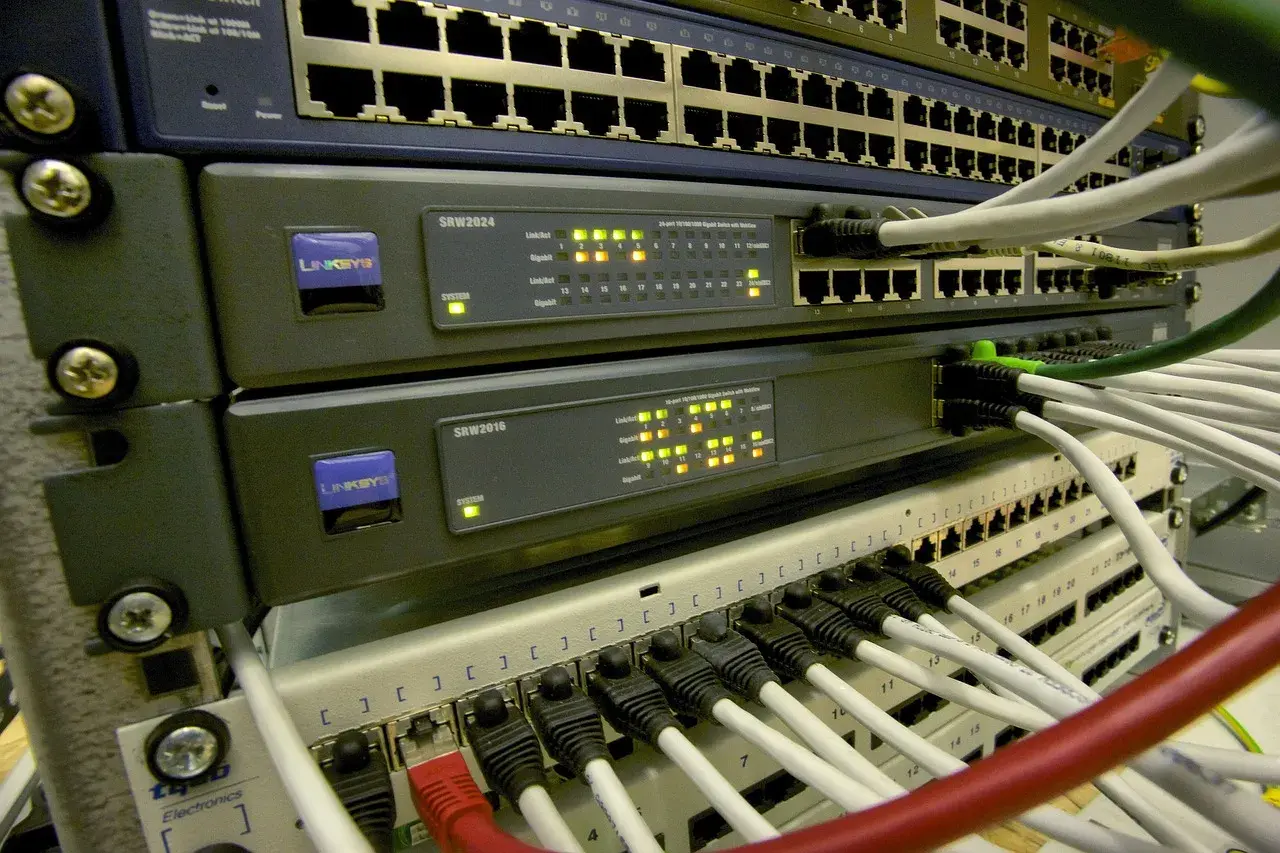
 Illustrative image: geralt / Pixabay
Vera Rubin NVL72 recorded the fastest time for this benchmark at 10.44 minutes across 1,024 GPUs, outperforming the GB300 NVL72 baseline of 13.78 minutes. The platform also demonstrated software flexibility by submitting results on two distinct inference backends: NVIDIA NeMo RL with TensorRT-LLM and with vLLM, which completed the run in 10.94 minutes. Shipping two viable inference backends on a benchmark this new indicates significant software maturity alongside silicon performance.
Driving these simulations is intensely CPU-bound. The integrated NVIDIA Vera CPU architecture sustains more than 22,500 concurrent RL environments across 256 CPUs in a single rack. While the GPUs manage token generation and rapid weight updates, the Vera CPUs operate in lockstep to feed the accelerators with the rich feedback loops required for agentic fine-tuning.
Hardware Architecture and Networking Fabric
The performance gains across all benchmarks are fundamentally tied to co-designed networking and interconnects. Inside the rack, Vera Rubin NVL72 connects 72 GPUs and 36 CPUs through a copper NVLink 6 spine. This configuration delivers 3.6 TB/s per GPU and 260 TB/s per rack, keeping MoE expert dispatch off the critical path.
Beyond the rack boundary, the platform scales via ConnectX-9 SuperNICs over Quantum-X800 InfiniBand or Spectrum-X Ethernet. Both fabrics utilize adaptive routing and congestion control to hide bursty MoE traffic behind the compute layer. Because the NVL72 architecture maintains a consistent 72-GPU domain, developers experience predictable performance jumps across generations without altering their operating model or fabric topology.
Software Optimization and Ecosystem Deployment
The verified results were generated using the standard NVIDIA AI software stack, including NeMo Framework 26.09, NeMo RL, and PyTorch releases. NVIDIA also shared unverified November 2026 re-runs on the same hardware to illustrate continuous software optimization. For example, Vera Rubin NVL72 reduced Llama 3.1 8B training time from 7.162 minutes in the official submission to 6.140 minutes with a newer software build, while DLRMv4 dropped from 2.829 minutes to 1.628 minutes.
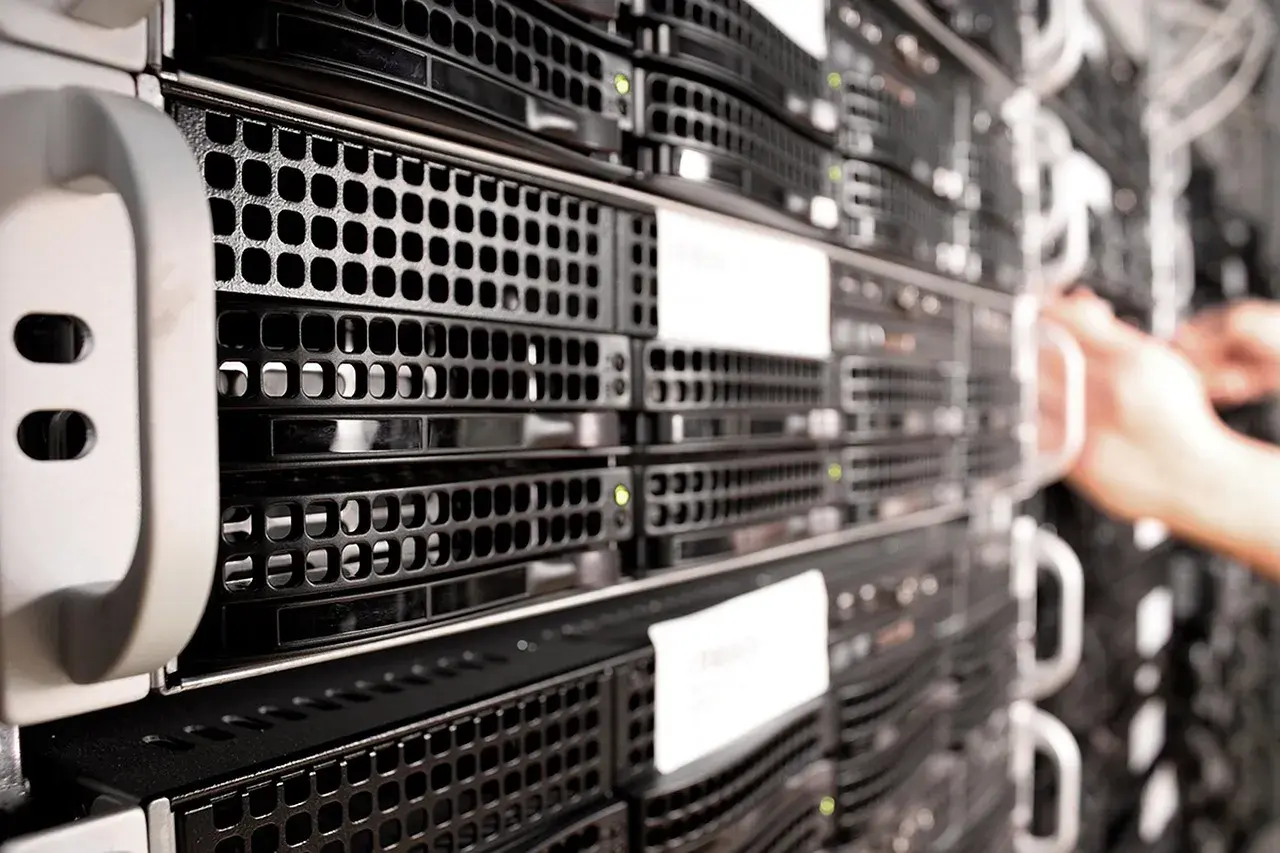
 Illustrative image: Schäferle / Pixabay
The CUDA platform’s programmability allows third-party developers to extract additional throughput. Thinking Machines Lab developed an NVFP4 training recipe for its Inkling 2 Small model on GB300 NVL72, using NVFP4 for forward-pass MoE GEMMs and MXFP8 for gradients. This custom configuration accelerated pretraining and fine-tuning by 8% and reinforcement learning by 20% with minimal accuracy degradation.
Deployment is already underway across cloud infrastructure partners and OEMs. Eighty percent of all closed-division submissions in this round ran on NVIDIA platforms across 20 partner organizations. Key ecosystem milestones include:
- Azure deployed a 2,560-node, 10,240-GPU GB200 NVL72 cluster that tied the scale record.
- Firmus utilized AI-driven kernel generation to post the fastest GB300 8-GPU results of the round.
- Vera Rubin platforms are generally available across various cloud infrastructure partners and AI Factory deployments.
Industry Shifts: From Coding to Scientific Research
While hardware throughput accelerates, model development strategies are evolving to address flattening benchmark gains. Moonshot AI announced a strategic pivot for its Kimi language models away from coding tasks and toward biology, chemistry, and pharmaceutical research. The company cited diminishing returns in software engineering benchmarks as the primary driver for redirecting its compute budgets.
Beijing startup DP Technology is already integrating the Kimi K3.1 Pro model into its BioMaster research assistant. In a controlled test, the system analyzed gene data from 3,696 mouse pancreatic cells and identified 100 candidate genes in 90 minutes, a task estimated to require four hours of human labor. International director Giacomo Ficari noted that scientific domains require more advanced reasoning capabilities than traditional sectors like law or finance.
Despite these efficiency gains, fully autonomous scientific discovery remains constrained. On the TCSExam theoretical computer science benchmark, leading models generated verifiable proofs but failed to independently resolve open conjectures. Similarly, the pharmaceutical sector maintains cautious expectations. A June survey of 50 US research leaders indicated that while 72% already utilize AI broadly, only 24% anticipate it will noticeably improve drug development success rates. The industry is currently navigating the gap between accelerated computational throughput and verifiable, independent breakthroughs.
Sources
- developer.nvidia.com: NVIDIA Vera Rubin NVL72 Achieves up to 2x Blackwell Ultra Performance in MLPerf Training v6.1 | NVIDIA Technic
- the-decoder.com: Moonshot AI pivots Kimi models from coding to science as benchmark gains flatten
Pneumetron
PNEUMETRON EDITORIAL TEAM
Rajini Ravindra holds an M.A. in History from Mysore University (KSOU). Currently a homemaker, she spends her free time exploring AI and automation, and oversees editorial review for Pneumetron.
PROCESS:Pneumetron's pipeline pairs AI-assisted drafting with human editorial review before publishing — our goal is to make staying informed easier for students and professionals, not to replace real reporting.
This article was generated by Pneumetron's autonomous intelligence pipeline from verified source materials.
Open Source Document at developer.nvidia.com, the-decoder.com ↗