RadixArk released DaisyRose-27B, an open-weight 27B parameter model trained entirely with reinforcement learning, reaching 12.0% pass@1 on Terminal-Bench 4.1 after 18 days on 144 H200 GPUs. The authors report a model FLOPs utilization of 37% and 57% lower training cost compared to their baseline open-source trainer. These are separate infrastructure and model releases from the past few days.
DaisyRose-27B builds on Qwen3.8-27B, retaining its 256K-token context window, tokenizer, and image understanding capabilities. RadixArk trained the model using Miles, an open-source RL framework designed for large-scale post-training, on 1,200 curated tasks spanning machine learning, software engineering, and science. The team selected tasks by running the base model first, identifying failure modes, and adjusting difficulty until the solve rate fell into a useful learning range. Each task requires multiple interdependent steps, with agents running up to 1.5 hours in a sandbox and making over 100 tool calls.
The training architecture separates inference from learning to avoid blocking. 128 H200s run the agent tasks while 16 GPUs handle the trainer in fully asynchronous mode. Updated weights distribute to the inference pool after every step. Because some training sessions reach 1M tokens, RadixArk uses harness summarization to fold long trajectories into multiple passes, keeping the training loop stable over nine weeks. The custom backend reached 37% MFU, compared to 16% on their open-source trainer. They claim this cuts the required GPU time by 57% and doubles end-to-end speed, processing roughly 16,800 tokens per second across the cluster.
Benchmark comparisons show consistent gains over the base Qwen3.8-27B model across every tested metric:
| Benchmark | Qwen3.8-27B Score | DaisyRose-27B Score |
|---|---|---|
| Terminal Bench 4.1 | 5.6 | 12.0 |
| Terminal Bench 2.1 | 73.0 | 75.5 |
| DeepSWE v1.1 | 42.2 | 46.2 |
| SWE Bench Pro v2 | 91.3 | 94.7 |
| HLE (text-only) | 33.9 | 34.3 |
| IFBench | 79.5 | 82.4 |
| GPQA Diamond | 89.2 | 90.7 |
RadixArk built the sandbox environment on AgentENV, scaling from one machine to 12 to handle up to 1,566 concurrent sandboxes. They report an 80% reduction in cloud infrastructure costs by dynamically adjusting memory allocation per sandbox. The model checkpoints are available under Apache 2.0, with serving recommended via SGLang and DSpark speculative decoding.
Reinforcement learning training cycles depend heavily on inference workers generating rollouts. As clusters scale, redundant prompt computation, slow weight distribution, and worker failures create bottlenecks that waste GPU capacity. NVIDIA announced Dynamo, a serving layer designed to sit between RL orchestration and inference workers to address these constraints. The framework maintains explicit boundaries: the RL optimization loop handles rewards and checkpoints, Dynamo manages routing and worker telemetry, and the inference engine executes generation and weight application.
Dynamo uses KV-aware routing to balance load and cache reuse. When multiple rollout attempts share identical prompts, the router directs requests to workers that already hold the key-value cache, avoiding redundant prefix computation without creating queues on a single node. This reduces the time spent waiting for the slowest rollout to complete, which often delays the next training step.
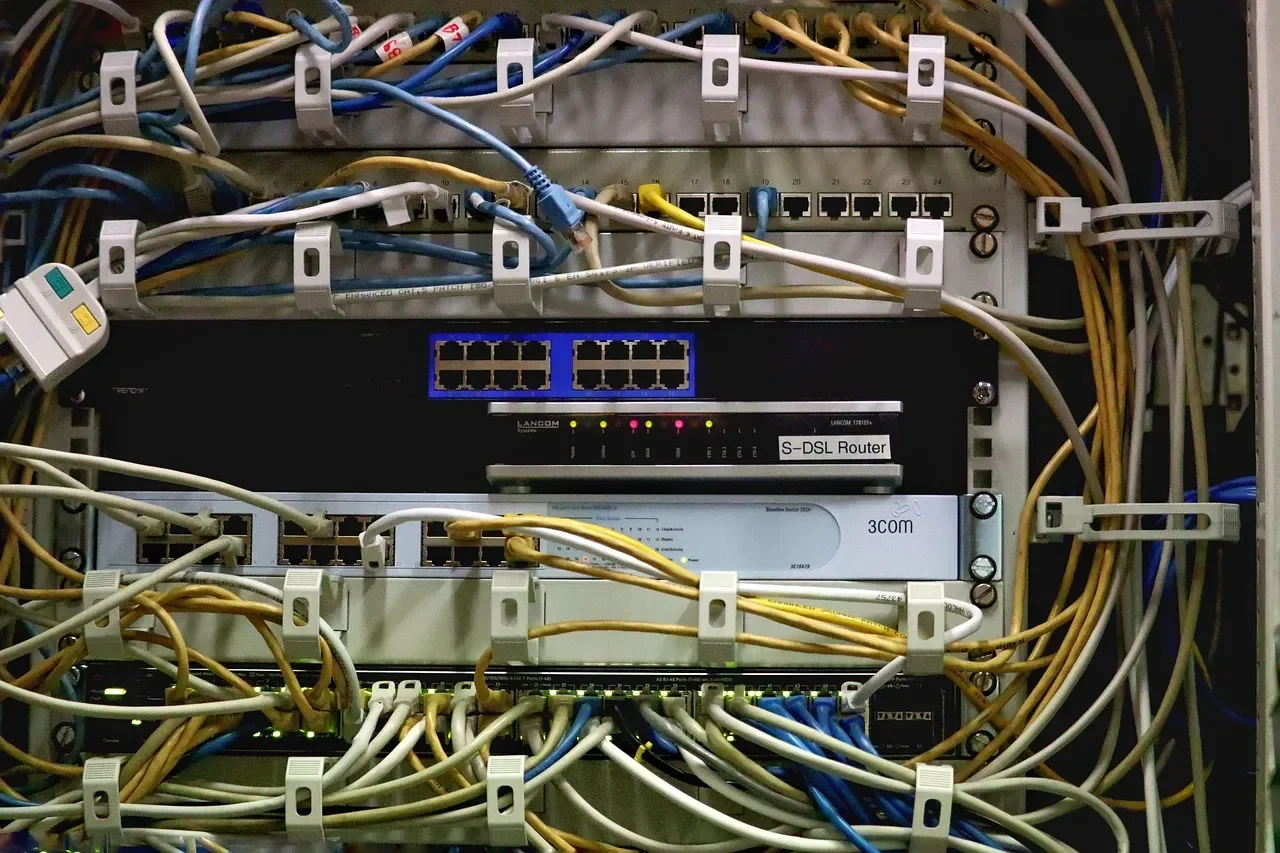
 Illustrative image: Vale_Photography / Pixabay
For weight distribution, Dynamo integrates with ModelExpress to handle delta weight transfers. Instead of sending full checkpoints to every worker, the system copies weights directly between GPUs over NIXL and transmits only the compressed changes. Workers reconstruct the new weights from their base version. This reduces network traffic and allows replacement workers to catch up while healthy nodes continue generating rollouts. The RL framework coordinates when workers apply updates and checks readiness before accepting new samples.
The framework also handles worker recovery by detecting failures, draining in-flight requests, and routing new tasks to eligible capacity. CoreWeave reports that Dynamo and ModelExpress accelerate model weight updates by up to 15x. H Company says the integration reduced average training-step time by 20% and GPU-hours by 5%. Open-source integrations currently cover verl, NeMo RL, Slime, and prime-rl.
NVIDIA Run:ai released its GPU Fractioning Operator for Kubernetes, adding per-Pod memory contracts and enforcement to Amazon EKS. The tool builds on Multi-Process Service (MPS) to allow multiple workloads to share a single GPU, bypassing the whole-device scheduling constraints of the standard NVIDIA device plugin. While MIG provides hardware partitions and time-slicing shares compute without memory isolation, fractioning adds enforced memory limits and per-Pod metrics.
In a validated setup on an Amazon EC2 g5.xlarge instance with an A10G GPU, two Kubernetes Pods each requested an 8 GiB GPU-memory limit. The operator placed both Pods on the same physical GPU, with each successfully allocating 6 GiB for CUDA workloads. Metrics exported by the operator show per-Pod memory usage, confirming the shared device view and enforcing the memory bounds. The walkthrough demonstrates that the system rejects a 9 GiB allocation request, keeping the total usage within the GPU's 23 GiB capacity.
The operator supports both time-slicing and SM-sharing compute modes, though the authors note these configurations do not provide fault isolation or security guarantees. A memory limit does not reserve proportional compute, and teams should test latency under concurrent load before deploying. Implementing fractioning on EKS requires a custom Amazon Linux 2023 image with the R615 NVIDIA driver branch, as the default EKS-optimized AMI does not include the required version. The operator also relies on containerd with NRI integration and the GPU Operator 26.7.1. AWS notes that the density improvement does not establish a throughput gain or universal cost reduction.
Sources
- developer.nvidia.com: Reducing Rollout Bottlenecks in Reinforcement Learning with NVIDIA Dynamo | NVIDIA Technical Blog
- aws.amazon.com: Using NVIDIA Run:ai GPU Fractioning on Amazon EKS | Amazon Web Services
- huggingface.co: DaisyRose-27B: Pushing the Frontier of Post-Training Efficiency
PNEUMETRON EDITORIAL
Pneumetron's pipeline pairs AI-assisted drafting with human editorial review before publishing — our goal is to make staying informed easier, not to replace real reporting.